
Different equipment. The same need to keep the work moving.
FastLane Ops is designed for independent repair businesses across automotive, diesel, marine, RV, trailer, and powersports. The workflow stays familiar while the unit details can fit the work your shop actually performs.
Built around repair work, not one narrow type of vehicle.
Customers, units, appointments, repair orders, operations, technicians, inspections, parts, payments, and reporting matter whether the unit has four wheels, a hull, a trailer, or something in between.
Keep customer, vehicle, repair order, inspection, parts, labor, and payment activity connected.
Use the same connected workflow for heavier repair work and service teams.
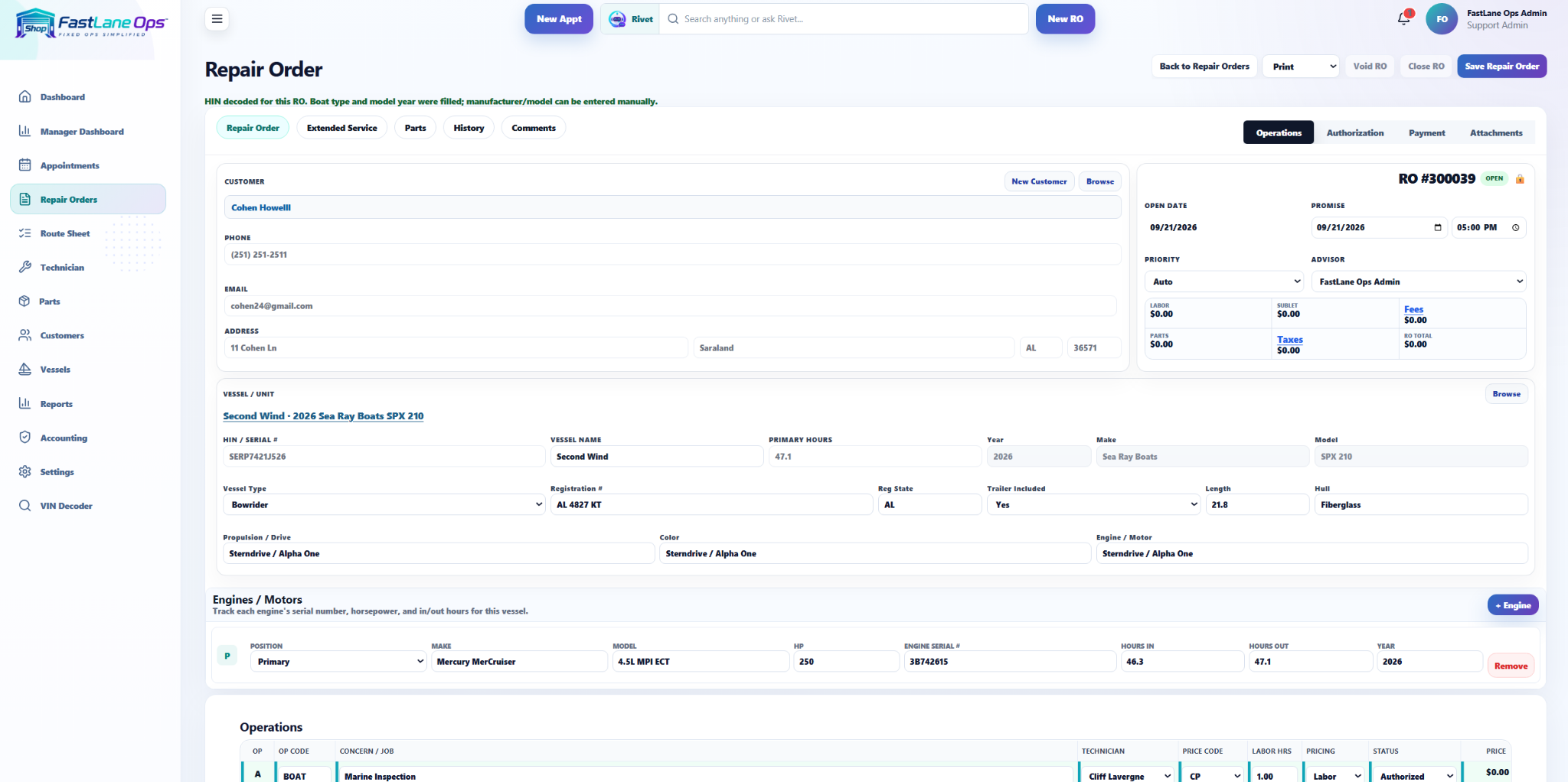
Track vessels, HIN information, vessel details, engines and motors, repair operations, and inspection work.
Keep complex repair visits organized around the customer, unit, work, parts, and technician progress.
Use a repair workflow that keeps unit information and the service work connected.
Manage service work with the same simple shop flow without forcing the business into an automotive only box.
A boat should not have to pretend it is a car just to fit the software.
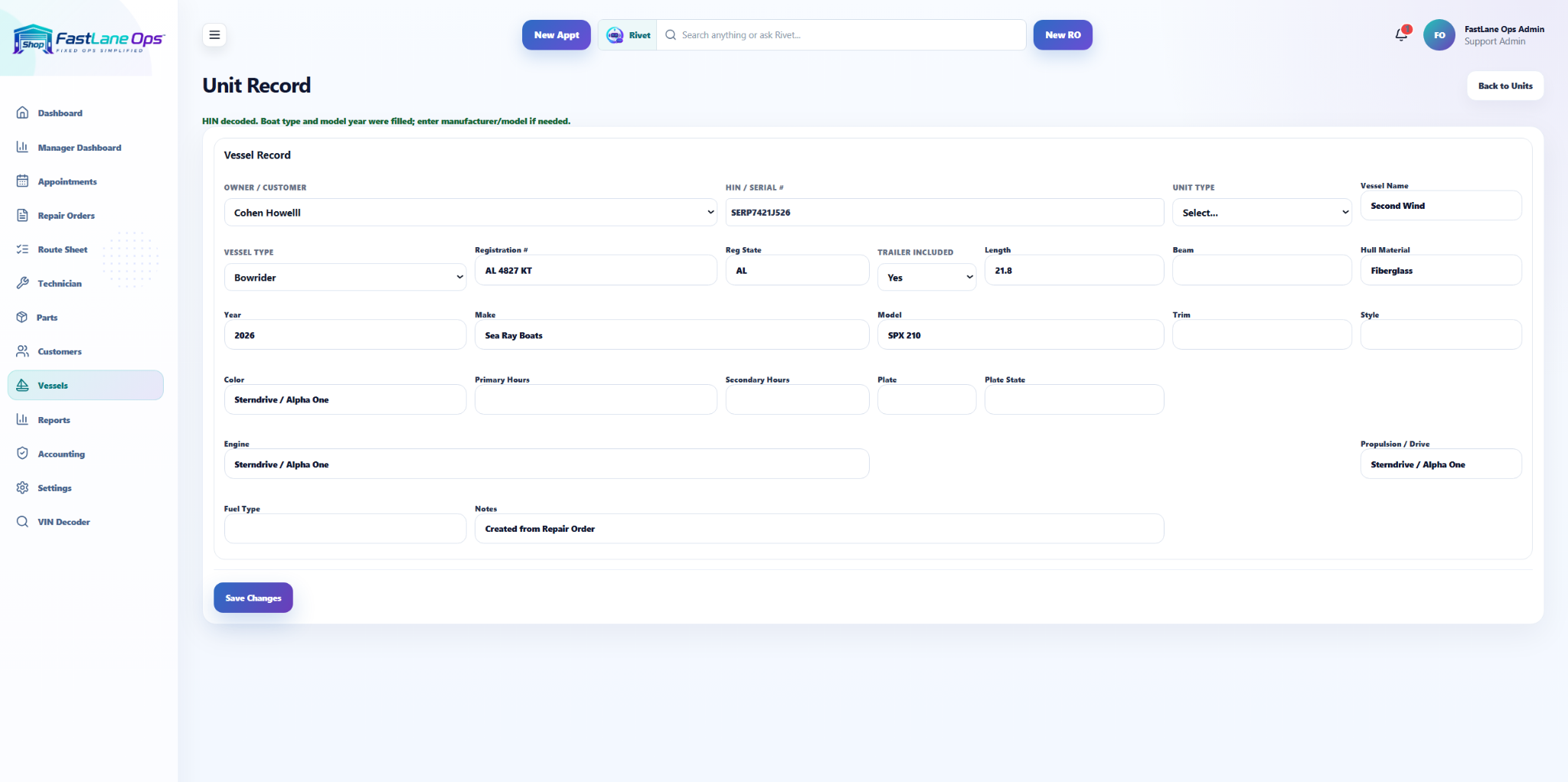
FastLane Ops keeps the vessel record built around marine work, with HIN or serial number, registration, vessel type, propulsion, hull details, and operating hours connected to the same unit.
Shops can track multiple engines or motors with their own serial numbers and hours. Key vessel and hour information can stay visible right on the repair order so the team has the details they need without digging through another screen.
Owners, managers, advisors, and technicians still need the same thing.
A clear picture of the work, fewer things falling through the cracks, and software that does not become the hardest part of the day.
Keep the day organized without buying an enterprise system.
Add structure as more people, jobs, and responsibilities enter the day.
Give different roles one connected place to see the work.
Use shop visibility and technician capacity to see where the day is getting tight.